iNTRODUCTION TO THE RESEARCH
This research is grounded in my practice, through which I examine how my technical training has given me ‘directional habits’, shaping how I perform and how I perceive excellence. These directional habits or “lines” can be understood through Sara Ahmed’s concept of orientation, where the body is directed along paths that determine what is within reach, and therefore what actions and responses (and ‘technique’) can be used in practice. In my own practice, training has oriented me toward ideas of correctness, control, and excellence, and perhaps limited my responsiveness to the actual performance. Through this research, I attempt to unsettle these orientations by placing myself in states of disorientation and not-knowing, in order to disrupt over-controlled approaches to performance, and then notice what happens.
I hypothesize that I might resonate with Slavoj Žižek’s ‘event’ when performing, which states an event is where something unexpected arises that destabilises what is established, in this case my established ways of performing. At the same time, I remain aware that I am still carrying external technical expectation, using imagined performance worlds, and my own desire to perform excellently. Žižek’s concept of traversing the fantasy is used as a framework as I aim to continue to perform within the chaos of these multiplicities. Rather than attempting to resolve or escape these tensions, my research investigates how I can continue to perform through them, negotiating disruption while remaining engaged in performing. Through this, I explore whether it’s actually within this tension that a more immediate, embodied, and reactive performance state can emerge, between my training and its disruption, between fantasizing about and the reality of doing the practice.
LINES THAT DIRECT ME
-
My own context as a performer feeds into this research. I studied classical music (the violin) at a vocational secondary school (Chetham’s School of Music) and contemporary dance at London Studio Centre, a dance college.
-
I am using practice based research methodologies, including feedback loops that help me to reflect on practice, gain knowledge using theoretical frameworks, and then apply this thinking back into practice.
-
My MA in Dance Research is at Rambert School. Read more here: Postgraduate Course - Rambert School
In 2026, I undergo research into performance and my own pursuit of excellence.
My research investigates how different approaches to performing might affect my sense of freedom, flow, my perception of technical excellence and failure, and my artistic decision-making in both rehearsal and performance. Drawing on my varying levels of training in dance and music, alongside my lack of formal acting training, I aim to explore tensions between training and intuition, and between following direction and performer autonomy.
When does training get in the way? When does it give me a leg up? And what is excellent?
A key concept in this research is orientation, drawing from Sara Ahmed’s Queer Phenomenology. By reframing training and rehearsal as a process of finding different orientations which affect me and produce different results as I carry out a task, responses shaped by environment and experience, I am asking whether this focus on what I am orientated towards, rather than my previous approach which stemmed from deliberate analysis, construction, remembering skill and then control and application of it to a task, allows my performance to emerge with a sense of abandon, freedom, and flow from what is within my reach as a performer.
For example, a pirouette:
I prepare the environment that makes a successful turn happen, including training the pathways of the movement, but during the actual performance of the movement, I focus on something else that is more ‘orientation’ based, such as an external rhythm of the turn. Technique is not abandoned, because it’s stored in the body, but it’s displaced at the time of actually ‘doing’.
As an actor:
I might prepare by working out exactly what my character wants to say in a scene, work out my intentions behind each line, but during a performance, I allow myself to let go and react and orientate myself towards ‘impulses’ that come up as I’m saying the lines.
The research asks whether altering approaches to preparation and the displacement of the preparation during performance can produce a more immediate, embodied, and ‘in-the-moment’ performance state, that is also ‘technically’ sound.
Another concept in this research is ‘traversing the fantasy’ and ‘Event’, drawing from Slavoj Zizek’s theories. I am asking if, as a performer, I am simultaneously fantasizing (whether about a narrative or artistic concept from within the world of the performance or about my ideals of how I want a performance to go) and at the same time, remaining aware of the unstable, vulnerable, ‘unrepeatable’ nature of my performance. I want to explore whether or not my embodied, flowing and immediate performance state exists best when I’m caught in between fantasy and reality.
The research explores what happens when I position performance as the unknown of an action and something uncontrolled, reactive, changeable but within a set of prepared conditions. I particularly want to explore this within performance that is ‘set’ or ‘blocked’.
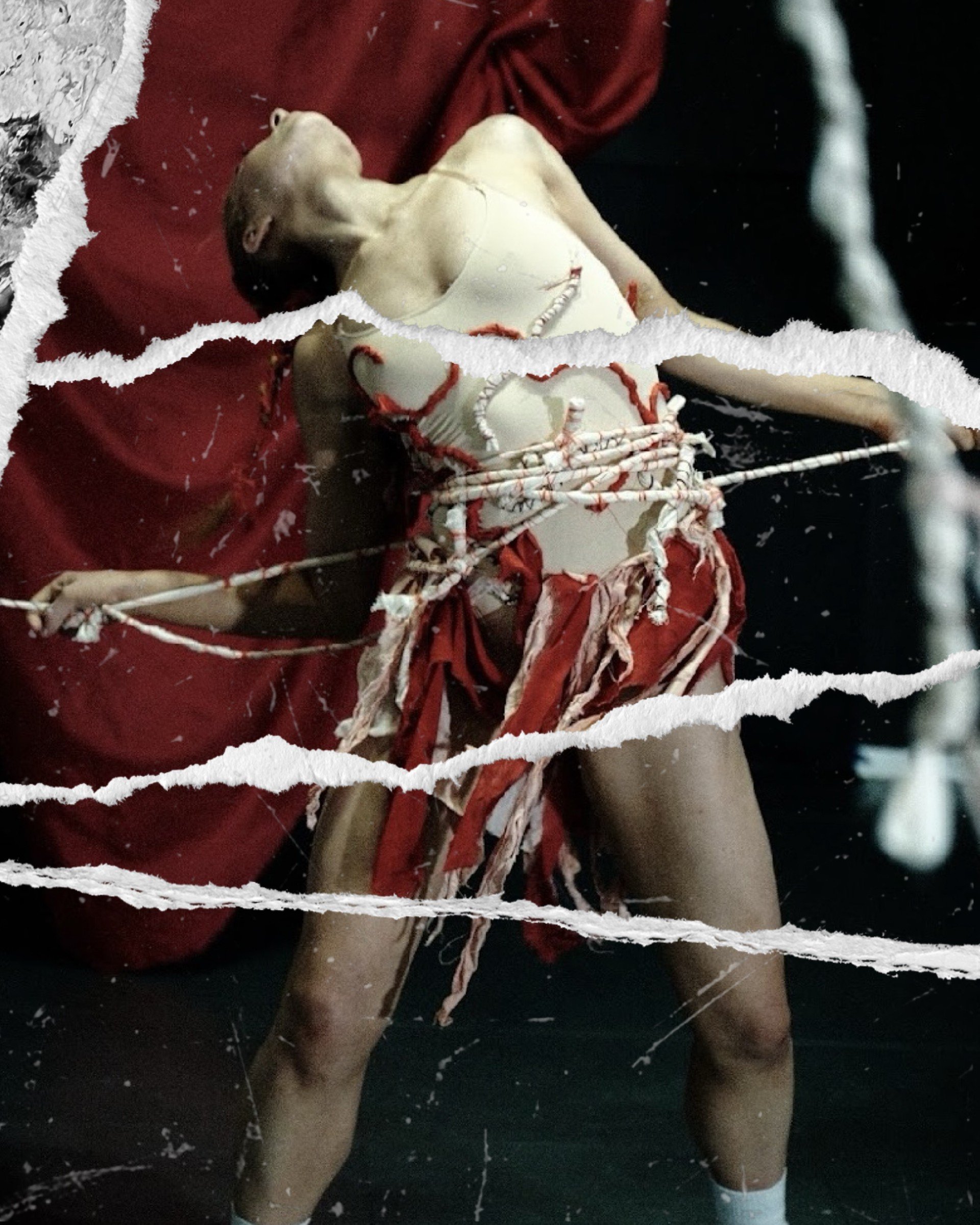
Using a practice-as-research methodology informed by phenomenology, I aim conduct a series of performance experiments in which I vary training, direction, and orientation. Through reflection and analysis, the project explores whether a more immediate, embodied, and ‘in-the-moment’ performance state can emerge within tensions between control/knowledge and not-knowing/spontaneity.
The research could be useful for performers wanting to understand how to ‘unlock’ themselves from rigorous technical training and the educators that might help them to do so. Similarly, the research could be helpful to directors and choreographers who may wish to guide performers away from their habits. Wider questions such as, what is technique? And how do you train an art? Also arise in the research.
I aim to
Develop my personal understanding of my own abilities as a performer.
Investigate how different approaches to performance affect my sense of freedom, presence, and artistic decision-making in rehearsal and performance.
Explore the relationship between my training and my intuition, and to identify when technical training supports or restricts embodied performance.
Examine whether shifting from deliberate technical recall to Sara Ahmed’s concepts of orientation enables a more immediate, flowing, and reactive performance state.
Test whether preparation followed by a displacement of conscious application of technique in performance can maintain technical integrity while increasing spontaneity, ‘aliveness’ and engaging performance.
Explore how Slavoj Žižek’s concepts of ‘traversing the fantasy’ and the ‘event’ operate in performance, particularly in relation to ideals of performers wanting good performance and moments of instability when doing it.
Investigate whether an embodied, ‘in-the-moment’ performance state emerges from within the tension between control and spontaneity, rather than through attempting to resolve mistakes mid-performance.
“Is there such a thing as excellence? as a performer, Excellence is through negotiating disruption that arises during the act, whilst still operating in the demands that have been set as direction.”
Why bother?
This helps me practically.
This research is for and within performance practices that use ‘technique’ but also seek to appear unbound by performer training and ‘correctness’, this might include those that want performance to appear as something that flows, or those that ask performers to perform difficult skills with ‘ease’. The research questions how a performer can embody learned technique and training, and whether ‘not-knowing’ can unlock a performer to be excellent. It is contextualised by my pursuit of excellence in multiple artistic disciplines and further contextualised by other academics that look to train artistry in performers, as well as philosophers that question habits .
Practitioners and researchers that have created work or researched in this field include:
- Dancer/Choreographers Steve Paxton and Deborah Hay, who challenge approaches to dance-making through their destabilisation of what choreography is and their use of embodied and intuitive practice in their work, often asking themselves and performers to re-orientate themselves away from what they already know.
- Educator Jamieson Dryburgh. His paper on Unsettling materials: Lively tensions in learning through ‘set materials’ in the dance technique class demonstrates methods to destabilise and re-orient the learner (of dance) so that new ways of learning and approaches to their practice can be reflected on and considered.
- Dancer/Choreographer/Researcher Liam Francis wrote a paper ‘What is Whose and Who is What?’ which is an example of practice as research with a phenomenological interest in the experience of performers, a methodology similar to how this research will be conducted.
- The Creative Articulations Process by Midgelow and Bacon acts as a starting point for reflections of practice based enquiry due to it’s looping nature of feedback and how it can be re-input into practice.
- Sally Doughty’s approach to reflective practice through ‘noticing’ is integral in contextualising my methodology in this research which is noticing what happens during preparation and performance as an approach to understand/widen my endeavours and versatility when performing, as well as shift my definitions and perspectives of excellence itself so that I lose fear that’s stopping me unlock new ways of doing.
These researchers and practitioners are contextualised themselves in my research through two overarching researchers, whose concepts I am using as theoretical frameworks.
Sara Ahmed’s Queer Phenomenology
In Queer Phenomenology, Ahmed describes ‘orientations’ as about the direction we take that puts some things and not others in our reach. Ahmed furthers this by suggesting that bodies can become orientated due to the responsiveness bodies have of the world around them. She says, ‘orientation involves aligning body and space: we only know which way to turn once we know which way we are facing.’ She also states that ‘Even in a strange or unfamiliar environment we might find our way, given our familiarity with social form, with how the social is arranged.’ Familiarity is part of the ‘homing devices’ that Ahmed highlights as something used to find our way through dis-orientation. Ahmed brings to light how ‘getting lost still takes us somewhere; and being lost is a way of inhabiting space by registering what is not familiar.’ Ahmed’s thinking is therefore a concept that I can use to pin my research on, research that alters my training methods and my perception of the outcomes I am seeking (my perception of excellence in my performance). My research uses methods that help me get lost and register what is not familiar, in order to find new ways of practicing my disciplines, and I do this with the research concern of finding ways of performing that feel abandoned from unhelpful structures and technical habit that I feel are not serving me.
Ahmed’s theory also defines the ‘lines that direct us’. Her research suggests that ‘we learn what home means, or how we occupy space at home and as home, when we leave home.’ I will use this concept to explore a hypothesis of how as a performer with technical training, even if my aim was to fully understand it’s uses rather than abandon it, I must still unsettle it.
2. Slavoj Zizek’s Event
Zizek describes Event as ‘the surprising emergence of something new which undermines every stable scheme’. He asks if an ‘event is a change in the way reality appears to us, or if it is a shattering transformation of reality itself’? I am using this conceptual thinking to research how performing is a multiplicity, as events are, described by Zizek, and hypothesize that when performing I have to be equipped to deal with surprising things that emerge, that will unstable me. Zizek writes of ‘traversing the fantasy’ and defines it as when fantasy is used to orientate reality. My research looks to relate my performing to traversing the fantasy because I am functioning within different worlds, (the reality of where I am performing, occupying imagined concepts/narratives/worlds, fantasies that aim me towards excellence). I relate traversing the fantasy to performance also because, when wanting to produce excellent performance, I suggest I must use my fantasy and my reality at the same time. I hypothesize that, as a performer, I must negotiate disruption that arises during the act, whilst still operating in the demands that have been set as direction, and, perhaps, use fantasy to navigate this tension.
This conceptual research accompanies practice-based research so that the conceptual and experience is brought together and remains relevant.
My own context as a performer feeds into this research. I studied classical music (the violin) at a vocational secondary school (Chetham’s School of Music) and contemporary dance at London Studio Centre, a dance college. In both settings, I have felt the weight and pressure of perfecting technical ability as the way to become excellent. In acting, I have no training, and notice that I view excellence differently and away from technical precision, but rather through noticing how I feel during the moment of a performance.

METHOD
The research methodology consists of practical experiments and reflection or practice/performance as research.
The controlled element of my research is three texts that I will act, two already written and one of my own. One piece of choreography (my own). And one piece of music (already written). Using these controlled elements, I will experiment how, with different approaches using the conceptual framework of orientation, traversing the fantasy and unsettling, any different outcomes occur when practicing and performing, by noticing sensations of
Autonomy and freedom,
Excellence,
Correctness
And Aliveness.
Deliberately, these terms are up for contention, and I aim for the research to also help me define these words in my practice.
I will capture the practice and performance through,
Video Recording
And immediate freewriting with controlled prompts for each session.
To reflect,
I will analyse what I capture through another framework, Kolb’s Cycle, which builds on Lewin’s model of Action Research and which takes the researcher through reflection by letting them enter a cycle of:
Concrete Experience
Observations and Reflections
Abstract Concepts and Generalisations
Testing concepts anew.
Linking back to Concrete Experience.
Additionally, I will randomly build into this cycle ‘Post-It Notes of the Unknown’, which gives me the right to unsettle my reflections with thoughts about my bias mid-sentence, before then completing the original thought. This allows me to remain vigilant and recognise how, as a performer/artist, I want to shape my practice through my own opinions and tastes, bringing them into the heart of the research rather than trying to hide them away through neutral reflection. It mirrors the unsettling that is also happening in the practice that I research. Importantly, the Post-It notes won’t be something I resolve, linking back to Zizek’s Traversing The Fantasy, but instead are left to help me voice what is not known and what continues to unsettle or direct me in my practice.
During the abstract concepts and generalisations moment in the cycle, I will write conceptual essays. In order to stay on track with the cycle, I may choose to pick one concept to test anew practically, and others to keep exploring through writing. This builds in a methodology of creative writing as research.
Practitioners and writing that I have used to create my methodology, and who I will continue to use to interrogate it as I progress further, are:
Sally Doughty and John Mason and their writing on Noticing.
Practice as Research writing from Linda Candy, namely ‘The Creative Reflective Practitioner: Research Through Making and Practice’
The study ‘Creative and embodied methods to teach reflections and support students’ learning’ from Phaedra Petsilas, Jennifer Leigh, Nicole Brown & Catriona Blackburn which is an example of reflection in a dance learning context.
The Creative Articulations Process from Midgelow and Bacon.
Jonathan Crewe’s writing on creative writing practice as research.
And Kolb’s reflective cycle which forms the heart of the analysis in the research.
I might call the methodology
Unsettling PRACTICE as Research.

From the Journal
Meisner’s ideas of ‘As If’ could be useful here, described by Gonslaves and Irish as ‘substituting someone, or something you know or can imagine, for the person (or thing or situation) in front of you.’ It’s a way actors access something they know for their scene. Meisner might ask two friends in a high stake situation in a scene to imagine As If they are partners, married for several years. The audience doesn’t know that’s what the actors are thinking and that it is not truthful to neither life nor the scene, the audience are just responding to the emotion that they see and the actors are using something they can find quickly, to meet what the scene requires of them.
If we re-frame As If’s for performance of any kind - I think I am looking for the art/technique to be As If it were an everyday thing, so that I respond in a way where I can keep my intuition, but it comes out through the skill. I’m looking, not to dampen the skill down as ‘pedestrian’ or ‘subtle’, but rather make some massive, exciting and excellent skill seem to just be how the performer responds day to day.
How do I do that? I need to somehow orientate these skill as something I really, really know. And I think it goes deeper than just practice and more practice. If I look at Martha Graham’s technique, she seems to have thought the same thing. The way that her movements link to things found in life itself: the breath, the spiral.
I need to look for ways to trick my mind that some new, technically tricky skill is actually a habit. As performers, habit is something we can be told to avoid, but perhaps, with this thinking, it’s also something that can be incredibly useful, and freeing.
random blog posts below…
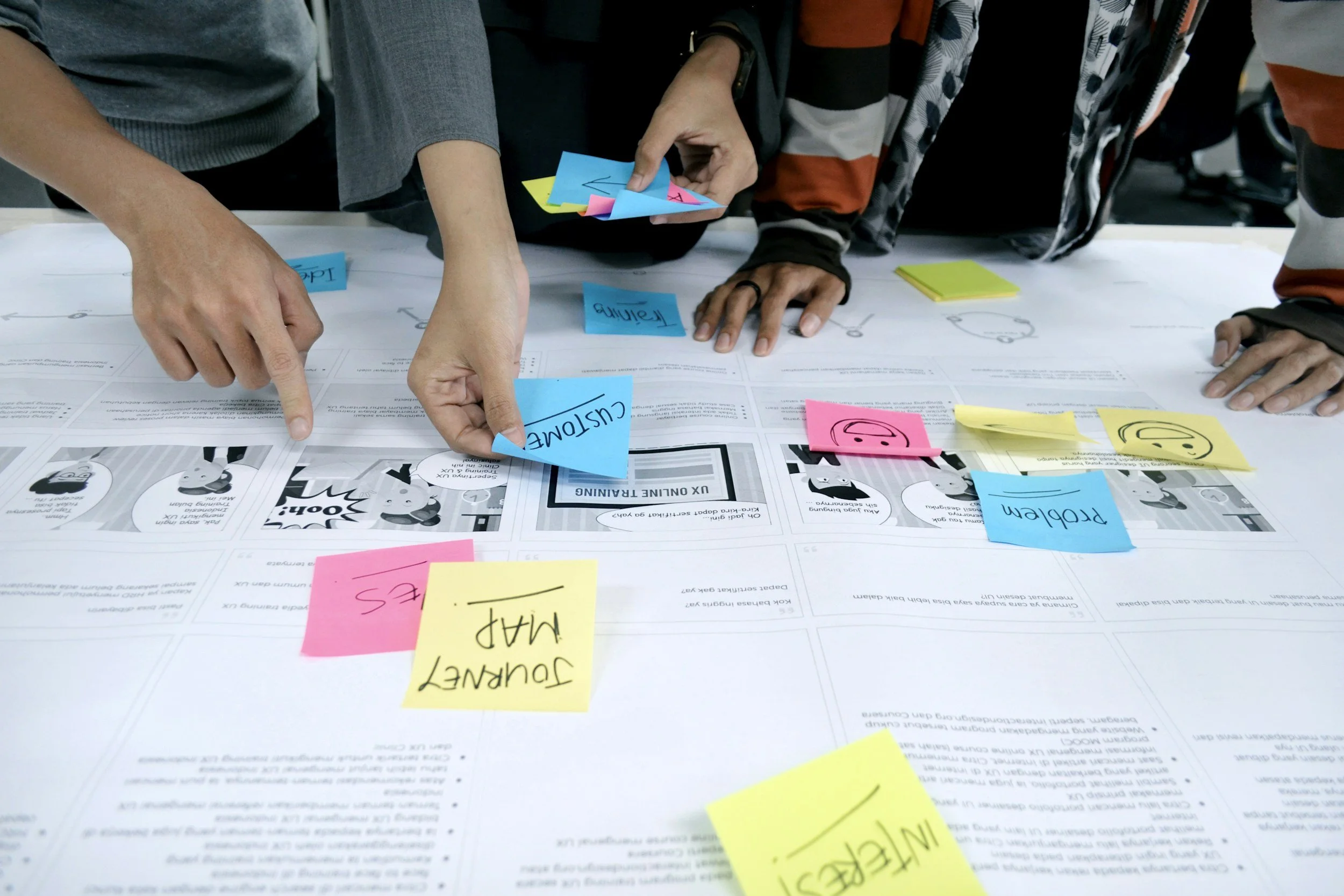


Adam’s Zine
Miro by Adam Mundzic is a short photography series that looks at accidental art.
It’s a load of lines and marks that appear unassumingly on the street.
“By looking closely at our environment we can create a dialogue of meaning and curiosity behind the mundane marks we see everyday, questioning the idea of what it is to create art and how context and space play a major role in what is considered valuable versus what is considered vandalism.” [Miro Publicity]
The work is simple documentation of marks left on pavements and street corners. It’s a collection of images of graffiti at its smallest, nature that is shyly lingering through marks they leave behind and other unobvious things. Some marks are contextualised as vandalism, some not, but in this collection, all mark making is under microscopic questioning, simply through arranging them into a Zine and holding it up as ‘ART’.
The zine asks, what’s the point of excellent art that plays by the rules, if all mark making by us, accidental or purposefully destructive, shares something about the experience of being human?
Let’s take this work and see it as something that questions the Canon.
If “the true use of art is, first, to cultivate the artist’s own spiritual nature” then perhaps this zine documents the greatest art we can know. This Zine is art that traces humanness in the wild. It shows the human desire to make a mark, and shows that each human will make a mark in a slightly different way. It shows humans will break rules to make their marks. And some marks are left to pass through time, documented or preserved. That feels like an explanation of all art and the why behind people making it and viewing it and archiving it.
If art is meant to “wash away from the soul the dust of everyday life”, then Adam’s work perhaps falls short. Because it is the everyday, with no dust removed.
Or.. has Adam’s collecting of these images, of accidental art work, now lifted them and shined a light on what could have been forgotten, washing away the dust of everyday life through the act of celebrating it, but keeping it raw, too.
If the artist is to say “I never paint dreams or nightmares. I paint my own reality”, then Adam’s work here is reality in a very bare way. In fact, even the act of documenting it and putting it into a zine shields the most ‘real’ versions of the artworks themselves that live on the streets. They’ve been squashed into a book and captured.
Why might these slightly pretentious and wanky thoughts be relevant to my choreographic practice? Because it sheds a light on how accidental movement, pedestrian movement, through its organisation and inclusion in performance can become celebrated and elevated. And that how, by doing this, it gets to the heart of what I think I’m trying to achieve -
The acknowledgement of how bodies make marks on their own. The archiving of what bodies want to say (through dance). Not marks that remain on streets, in my case, but marks that are fleeting, marks for the moment it lives in space and marks that might be forgotten.
If my reasoning behind making choreography is on the unique marks that each human makes, then to assemble, practice and use just a few codified ways of moving (ballet, jazz, hip-hop) means that the importance of the mark making made on stage feels… meh. It is not reflective of the many movement marks humankind makes, but rather the celebration of a few and the ego’s behind them that have decided ‘this is the way’. Adam’s work gets to the heart of this, this mark making of humans as enough for art, without the need for it to hold up in ‘the court of art’ but rather allowing passers by to come to their own judgement of what happened, why they formed, why the mark is there.
Adam’s work also helps me look at how dancers take on board material. Within a codified technique, the mark making that appears on top of the learned movement technique from an individual is what is interesting to me, not the pristine, power-washed-street perfection. I’m keen to see dialogue between techniques and the person doing it. So I suppose I’m interested in the ‘vandalism’ of codified techniques, and the repurposing of this vandalism as new art. What is sad is that I feel this vandalism is often trained out of people, so much that it can be lost.
At the moment I feel quite interested in art untouched by learned concepts of artforms and the marks made by individuals with their ‘mundane’ and ‘everyday’ vitality, because that’s when I feel like dance is actually communicating something. Perhaps more so, I’m interested in where these two things, the what that is considered valuable by the canon and the what that is considered vandalised meet. How can they co-exist in one performance, in one structure.
Sara Ahmed and Queer Phenomonology in dance
Sara Ahmed and Queer Phenomenology in Dance
“Perhaps home is not a place but simply an irrevocable condition.”
– James Baldwin from Giovanni’s Room.
My home, as in, the place where I grew up, where my Mum and my Dad and my Dog still live, is often described as ‘The Middle of Nowhere’. To others, I am sure it can feel like that. A small, two bedroom house made out of granite, with mice in the drainpipes and spiders in the sink, sat in the dip of sparsely populated moorland, with neither people, trees or buildings to help decorate the landscape. It is quite a barren place. Perhaps not an obvious place to find a homosexual, dance academic. Or, perhaps it is.
At the same time that someone might look at my house and think that ‘this is in the middle of nowhere’ (or as a friend once put it, ‘this is the most godforsaken place I have ever been to’), when I view my house, I think of it as very much in the middle of everything. Or if not the middle, a crucial starting point; of memories, of feelings, of ideas and dreams, of family. Sara Ahmed in ‘Queer Phenomenology’ defines familiarity as ‘what is, as it were, given, and which in being given “gives” the capacity to be orientated in this way or that’ (Ahmed, 2006). The crumbling outer wall of my house is to me, familiar. I know it through different memories; of playing tennis by myself and hitting the ball on and off of it, I know it through the bracken and lichen that I have seen grow through cracks over time, the swallow and jackdaw nests that are put to use in spring and summer that are made and re-made each year just between the top of the wall and the guttering, the guttering too has its own familiarity, its own memories, a thin plastic tube that somehow weathers the storms and gale forces that have sent trampolines and tents over our head, the memory of a failing water collecting system made from dustbins on slopes, that my mum introduced since an obsession over Armageddon took a hold of her and she started worrying that Donald Trump in power means that our taps would run out of water. To others, though, what is in front of them, is just a wall.
Of course, it might not just be a wall for them. The wall might remind them of something in their own lives. Perhaps they saw a wall like it in their favourite film, in their grandmother’s house. The grey colouring of the stone might match their hair, or their granite counters in their island kitchens back in their home in Kensington. Ahmed says, on this, that ‘even in a strange or unfamiliar environment we might find our way’ (2006). Even if you have no memory or feeling about my wall, you will most likely have enough knowledge to know that you can’t walk through it. So with familiarity, on what is immediately in front of me or because of a memory of a thing that I can relate to what is in front of me, I can orientate myself through a space, through the familiar and also, the unfamiliar, using knowledge I have to guide me.
My dance research has centred around this idea of noticing what I do in my dance improvisations. It’s been about noticing how I orientate myself in space.
I’ve noticed that I always orientate my body in response to something else. Perhaps what is in the space, perhaps a feeling, always many things, multiplicities of responses. Some of this orientation is a response to me inhabiting ways that my body has practiced moving before i.e., using my dance training. Some of this orientation is a response to me deliberately trying to not move like I’ve moved before, and perhaps move like someone else. I’ve also noticed though that responses are not attempts at replication, of moving using a certain technique in my toolkit or moving exactly like a choreographer who’s work I have seen, but instead, my body orientates itself in my improvisations through entering a conversation between where I’ve been (my dance training, work I’ve seen) and the present state of my body in that moment of dancing. To add to this mix, I also carry with me in my improvisations a desire to move. Some desires on some days are more specific, i.e., to move like a Cunningham dancer, some desires are opinionated, to be fucking excellent, other desires might just be, to move.
Ahmed says,
“If orientations are as much about feeling at home as they are about finding our way, then it becomes important to consider how “finding our way” involves what we could call “homing devices.” In a way, we learn what home means, or how we occupy space at home and as home, when we leave home.” (2006)
I am doing this research so that I can understand my movement habits. Both, to find new ways of moving and to be able to define how it is that I move. I am doing this research to notice what ‘homing devices’, what movement habits, draws me back into the familiar patterns I use when I move and dance. I am a product of technical dance training, and so the research comments on how my technical dance training has made me improvise. But, I am a product of many other things and so this research is not entirely biased of that training in dance. Let’s start there, though.
What is known.
I am a product of dance training that focused on what’s labelled as ‘contemporary dance techniques’. From 2020-2023, during term time, I trained in Ballet, Cunningham, Graham and Jazz dance techniques as my ‘core’ area of study. As I progressed through my training, weekly or twice weekly classes in the ‘Release’ technique, in improvisation and contact improvisation and in street dance styles also enriched my programme of study. My definition of the focus of this training and the course’s programme, having completed it, is to train contemporary dancers for the working dance industry (as performers), with an awareness of also equipping dancers with skills that can be used in dance-theatre, including jazz dance and musical theatre. For example, in my second and third years, singing and acting formed part of my study.
‘Contemporary’ techniques, in this context, aren’t that ‘contemporary’. Rather than chosen for their ‘newness’, the techniques have been chosen by what is deemed useful for a versatile contemporary dancer of today. Cunningham, Release and Ballet are common techniques studied by contemporary dance students in the UK. The addition of Graham is more specific to the institution where I trained. It’s worth noting here that, as an opinionated and belligerent 18 – 22 year old during my training, I was quite resistant to the dance techniques that took me away from my ‘axis’, my ‘correct ballet posture’ which I sought to ‘master’, and those techniques that took me away from western dance techniques in general.
Ahmed says ‘orientations are about the direction we take that puts some things and not others in our reach’. To be pragmatic and consider the logistics behind creating a course to train versatile contemporary dancers, choices have to be made. And so by incorporating the chosen core studies and additional techniques into a programme, some ‘orientations’ in my dancing have been practiced through the course, with the training programme designed to put some things within my reach (such as posture and placement of the Cunningham technique), and some orientations have been put out of my reach. I have noticed, for example, as I improve my ballet posture, the postures I attempt to find for hip-hop suffer.
With this knowledge from my training in my body, as I dance now in my improvisations, I can see traces of my body remembering things that it has been taught, even when I am not consciously thinking about ‘using’ these ‘techniques’ in my dancing and even when I am just dancing for the sake of dancing (for fun).
I notice:
I move on an axis that is up-right often,
I sometimes move to make shapes rather than feelings
I move with turnout
I move and turn
I move and I am often vertical
Jennifer Jackson, a ballet teacher and author of An Essential Guide to Classical Ballet says
Like all classical art forms, ballet draws on the classical ideals of balance, harmony and proportion. These qualities are found throughout nature, including in the human body, which is naturally vertical, symmetrical and balanced (2020).
If this is true, then what I notice, this search for the vertical, for symmetrical moments that are rarely deviated from, in my improvisations seem to come from being influenced by ballet. Especially, when I pair this with my noticing of how I often want to turn out my muscles or even just slot in ballet steps such as particular turns or jumps. It’s worth mentioning here that I was never particularly good at ballet. Growing up, I enjoyed watching it and would often watch rehearsal videos of royal ballet dancers (as this was what was most readily available). But it seems that ballet has been the loudest voice in my training simply because, perhaps, nearly every contemporary/jazz teacher that I have been taught by, has also studied ballet, and because it was the movement practice I learnt first.
Right now, in this time where I am been questioning why I move like I move and to counter some of these things, I have been seeking ‘affordance’ for ways of moving that contradict my practiced movement patterns. If I largely move within the constraints of western dance techniques, if ballet structures remain engrained in my movement, then how can I give myself more options to move away from these structures?
If I look at Jennifer Jackson’s definitions of ballet as balanced, harmonious and proportionate (2020), an obvious place to start is to go against some of this.
I started exploring how I can move in ways that feel like they counter what is ‘harmonious’:
I move across the body, sending limbs across my axis so that my body twists and scrunches.
I move my pelvis, my rib cage, knees in circles, getting bigger and bigger and bigger, so that I don’t lead from my arms, my legs.
I move, following my nose, entering my backspace.
I move, inverting my limbs so that they are ‘upside down’.
Physically, I am working to break away from something that feels proportionate.
But, I notice that another thing has entered and swarms the body from my training and from ballet. The feelings of doing these techniques. A kind of ‘dancer’ personality that wants perfection and virtuosity. The same personality can be anxious and fear moving altogether. It can be snooty and serious and moody.
I explored how I can move with different feelings:
I move with shifting dynamic textures
I move with different intentions (for example, move to be ‘imperfect’, move to make ‘a mess’, move without striving for virtuosity)
I move with my own humour
I move without fear
What I noticed was that much of these starting points for movement took me away from learned techniques from my training.
What I also noticed, is that my training was still being utilised. And so my movement becomes a conversation between trained pathways and new explorations.
My research question, after gaining knowledge and after noticing that some learned techniques linger in improvisations, even when I am trying to counter my training, and after seeing how ‘colonised’ the way that I move has become from learning such techniques is, what way of moving is my own? How can I find ownership of a way of moving that feels free of fear and external pressure, but also one that feels satisfying and ‘worth’ something to me? Perhaps also to audiences?
What is my physical voice and how can I use it?
Choreographing the enquiry:
Traversing The Fantasy
I am a choreographer in training.
A thought I have been preoccupied with for a while is why and how movement is made. Having originally set out on a research journey that wanted to understand dramatic intention behind movement, I have been led to discover more about the intrinsic sensations of the body where movement naturally occurs. I could, as others have, define these movements as ‘intuition’, as ‘embodied-cognition’. These movements could appear as improvisation, a desire to dance to music, they could not just be dance but rather movement that aims to calm me down such as ‘stimming’, the movement patterns could be something as simple as movement as part of a reflex, the natural pull away of my hand when it touches something too hot to handle, or my understanding of proprioception when navigating a busy tube station. All of this thinking is body-thinking, it is thought that is ultimately guided and led with the whole of the body, not just the brain. In a recent conversation with Dr. Aby Watson, a queer neurodivergent choreographer, performer and academic of ‘stim-dancing’, Watson reminded me of the ‘neuro’ in neurodivergent, emphasising the fact that neurons ran throughout the body and this made me want to think more of the diversity in body-thinking that exists and ranges person to person, body to body.
As a choreographer in training, I seek to become aware of how my body thinks. Not aware so that there is an outcome of me then being able to manipulate what my body thinks, as perhaps I had previously tried to achieve with using dramatic intentions in my work, or indeed during technical dance training, but to become aware so that I understand what my body wants to say in the moment and why, so that environments that I can set up in my rehearsal studios can foster and give affordance to my body and help it generate material.
Seeking to do this has led me into practices that facilitate greater reflection on my improvisations, my habitual movement, my struggles and thoughts whilst choreographing and I have created feedback loops that circle practice with reflection with theory with practice with reflection with theory and so on.
Through doing this reflection and research into my practice, what becomes clear is how my confidence, my fear and my shame around how I move holds me back. I am preoccupied so much more with how a movement will be perceived when choreographing than I am with what the movement is exploring, the enquiry of my choreography. A shift was needed at the beginning of my research, towards this idea of choreography and dance as enquiry rather than as a creative outcome or product, in order to loosen up myself from the perfect, and I feel as though this shift of thinking is continuing to help with maintaining an openness in my choreographic development.
On the day that I am writing this, I feel not like a choreographer at all, the etymology of the word being to ‘write dance’, a dance (Khoreia) writer (graphein). This is partly what I do, but some of the dancing doesn’t become written, it doesn’t form enough as ideas to be fully constructed into coherent words and some of the dance remains as philosophical thoughts of enquiry that float around, change and interrupt what I make. These thoughts have the ability to shift constantly and so my practice does as well. In fact, right now, I feel much more like (albeit a mediocre) philosopher who has chosen dance as the knowledge sharing output for my thoughts, wonderings and abstract enquiries about the world and how I take part in it.
You cannot say things like this and not sound wanky and pretentious.
But this is how I can best describe what I am feeling, which in dance, isn’t often put down in words.
At the moment, the enquiry, the knowledge-seeking, the making dance that makes me think more about how and why I and others make dance, is what is exciting to me, rather than creating the best version of Cinderella that dance has ever seen. I think it’s important to add here that I believe the best ways to share knowledge is through engaging, entertaining, relatable, fun and enjoyable experiences for the viewer. So, even the best production of Cinderella that dance has ever seen could be how someone, a choreographer, enters enquiry about the why they make dance, the how they do it and enquiries about dance and philosophy more broadly. It’s hard not to mention internationally acclaimed choreographer Wayne McGregor here, who’s work deals with scientific, body-knowledge enquiry, but who’s work is frequently performed on ballet stages to audiences in their thousands each year, many of whom might be unaware of Wayne’s research that assists the making of his dance and simply in awe of the spectacle this research can produce.
Through researching how and why I make dance and entering choreographic enquiry, I have found a sticking point in my practice that makes me more and more curious each time I come across it. It’s the concept of ‘the imagined’ in dance-making. Fantasy. At first, this came up in my practice as me wanting to understand how intentions and actor-training systems could help me to pin down my imagination so that it was helpful in the performance of my dance to provide me with the ‘right’ textural qualities that I felt that the dance I was doing, needed. I feel it more important now to focus on my use of fantasy and imagination that already exists in the ways that I make dance. Philosopher Slavoj Zizek states that there are fantasies so engrained in us that it’s these imaginings that help us see and process the world. He writes a wordy definition of what it means to traverse these fantasies, and upon reading it, I realised that Traversing The Fantasy is something I want to do much more in my practice. Zizek says:
“In our daily existence, we are immersed in ‘reality’, structured and supported by the fantasy, but this very immersion makes us blind to the fantasy frame which sustains our access to reality. To transverse the fantasy therefore means, paradoxically, to fully identify with the fantasy, to bring the fantasy out.”
Writing from my choreographic practice, not only does my body think with it’s many neurons, but it can also fantasize and believe it’s own lies. That makes choreographing the reality of something, working with the reality of my body, a challenge. Zizek goes on to quote Richard Boothby who says:
‘Traversing the fantasy’ thus does not mean that the subject somehow abandons its involvement with fanciful caprices and accommodates itself to a pragmatic reality, but precisely the opposite: the subject is submitted to that effect of the symbolic lack that reveals the limit of everyday reality. To traverse the fantasy in the Lacanian sense is to be more profoundly claimed by the fantasy than ever, in the sense of being brought into an ever more intimate relation with that real core of fantasy that transcends imagining.’
It took me a while to understand what this means, but I’ll continue for now. Zizek helped me by framing Boothby’s remarks, saying:
“Traversing the fantasy is ‘not to see through it and perceive the reality obfuscated by it, but to directly confront the fantasy as such. Once we do this, its hold over us is suspended – why? Because fantasy remains operative only insofar as it functions as the transparent background of our experience – fantasy is like a dirty intimate secret which cannot survive public exposure.”
Importantly, Zizek/Boothby/Lacan is not asking everyone to stop fantasizing, but writes about what happens when there is an awareness of the fantasy, in the moment it occurs.
Let’s look at a fantasy that has come up in my improvisational dance practice. That fantasy is ‘I am seen as ‘good’ if I dance with a balletic alignment’. For whatever reason, perhaps my training, perhaps being a product of a western society, that is a fantasy that has a severe grip on my practice and has done for a long time. If I traverse this fantasy, however, I am noticing when a movement I do makes me feel ‘off’ and I recognise this discomfort that makes me feel the pull to ‘restore’ this movement, in my case, to get back to balletic alignment and to return to the fantastical image in my head of a ‘good dancer’. I am made aware of this impulse and I believe the fantasy that if I do restore my movement, I am good, I am valuable.
But if I am to traverse the fantasy, I would not do this. I would not rush into the known. Instead, I would continue to dance whilst aware of an arising tension that unsettles me, aware of this feeling of an awkwardness in the body and aware of the fantasy that correction towards how my body has been codified by trained technique equates with an idea of ‘goodness’. And it’s in this unresolved sensation of dancing both ideas at the same time, dancing the feeling of the pull of correction into good ballet alignment and the not rushing to do so, where I feel like I am finding my choreographic material at the moment. It’s in this gap that I think things are interesting, that I feel like I’m finding ‘self’ in dance. And this makes sense, because it’s my body in a kind of dialogue of where I’ve been (my training, my fantasies) and what my body wants to say in the moment.
I am just a choreographer in training… so let’s look at someone who is established. Let’s circle back on Wayne McGregor’s work. Through understanding more about my own practice, my perception of how McGregor works has changed from thinking his interest was simply in generating new movement (and almost failing to do so, with it so rooted in balletic language), to now thinking that one of his interests is in this dialogue between how a body has been trained and how it wants to think.
^ Dancers Joseph Sissens, Fumi Kaneko and William Bracewell in a streamed rehearsal of Wayne McGregor’s MADDADDAM, filmed at The Royal Ballet and Opera House.
In fact, I could see his work as trying to embody this tension between how something has been trained to move and the vitality at the core of these bodies and how they truly want to move and think like. Viewing Wayne’s work this way makes it much more moving to me. The work no longer is about the stories or technology that Wayne collaborates with, but instead, they become tools in which a body sits in the tension between their trained system and defying it. McGregor choreographs this unsettled place, of landing neither in or away from systematic dance, allowing the dancers to dance both their understanding of their training, their awareness of the pull towards it and to not rush back to ‘the known’ or ‘their known’.
I’ve written of queer theorist Sara Ahmed and her definitions of orientation and dis/orientation before, particularly Ahmed’s definition of queerness as ‘facing towards a home that has been lost and towards a place that is not yet home’. This feels like the gap where Wayne is asking the dancers to dance in. It feels like I’m watching dancing that is a recognition of the unsettled nature of the ‘home’ of bodies and the queering of balletically trained dancers.
I am researching my practice to understand what my ‘home’ is, what comes up that pulls my body to a known and what unsettles this. I’m interested in becoming more aware of my fantasies that help me process the realities of when I’m choreographing and I’m interested in what happens when I don’t rush back to the known, when I choreograph this unsettling. Not because I’m defying the way that my body has been coded up until now, because that is part of my artistic self too, but because by dancing in the unsettled place, I open more doors to more enquiries. I am open to more choreographic material. I am working to give affordance to more choreographic possibilities. As a choreographer in training, that feels like the most important thing I can be doing for my practice right now, perhaps forever.